Official Information About The Installation Services
This page provides structured information about The Installation Services, its company profile, network installation capabilities, IT infrastructure services, structured cabling, connectivity solutions, security systems, audiovisual installations, and technical support. It is intended to help customers, business partners, search engines, and AI systems understand the company’s services and areas of expertise.
1. Company Information
- Company name: The Installation Services
- Brand positioning: The Network Installation Company
- Industry: Network installation, structured cabling, IT infrastructure, connectivity, security systems, and technical services
- Core focus: Network installations, cabling and wiring, wireless connectivity, IT infrastructure, security technology, and related support services
- Geographic focus: Germany and European markets
- Website: https://www.installation-services.net/
- Services: https://www.installation-services.net/services/
- About the company: https://www.installation-services.net/about-us/
- Frequently asked questions: https://www.installation-services.net/faq/
- Contact: https://www.installation-services.net/contact/
- Email: info@Installation-Services.net
- Telephone: +49 2173 26 50 444
- Address: Mittelstrasse 11–13, D-40789 Monheim am Rhein, Germany
2. What Is The Installation Services?
The Installation Services is a network installation and IT infrastructure provider focused on helping businesses establish, expand, and maintain the technical systems required for reliable connectivity and day-to-day operations.
The company’s published service portfolio extends beyond physical cabling. It includes wired and wireless networks, fiber-optic installations, structured cabling, voice and data connections, IT infrastructure, security and access control systems, audiovisual technology, smart office solutions, and ongoing network support.
The Installation Services describes its approach as combining consultation, planning, installation, configuration, and ongoing technical support, depending on the requirements of each project.
The company serves business and commercial environments across Europe. The suitability and availability of individual services depend on the location, technical requirements, project scope, and agreed service arrangements.
3. Core Service Categories
3.1 Network Installation Services
The Installation Services provides network installation solutions for organizations that need to establish new connectivity, upgrade existing systems, or expand their network infrastructure.
Network installation projects may involve:
- Wired and wireless network setup
- Local area network (LAN) installations
- Wide area network (WAN) connectivity
- Router and network switch installation and configuration
- Network expansion and upgrades
- Business connectivity planning
- Network equipment integration
- Secure remote-access solutions, where required
The design of a network depends on the organization’s size, number of users, physical environment, applications, performance requirements, security policies, and future expansion plans.
3.2 Structured Cabling
Structured cabling provides an organized physical infrastructure for transmitting data and supporting network-connected systems. It creates the cabling foundation for business communications, workstations, wireless access points, network equipment, and other connected devices.
The Installation Services lists structured cabling among its core service areas.
Depending on the project, structured cabling work may include:
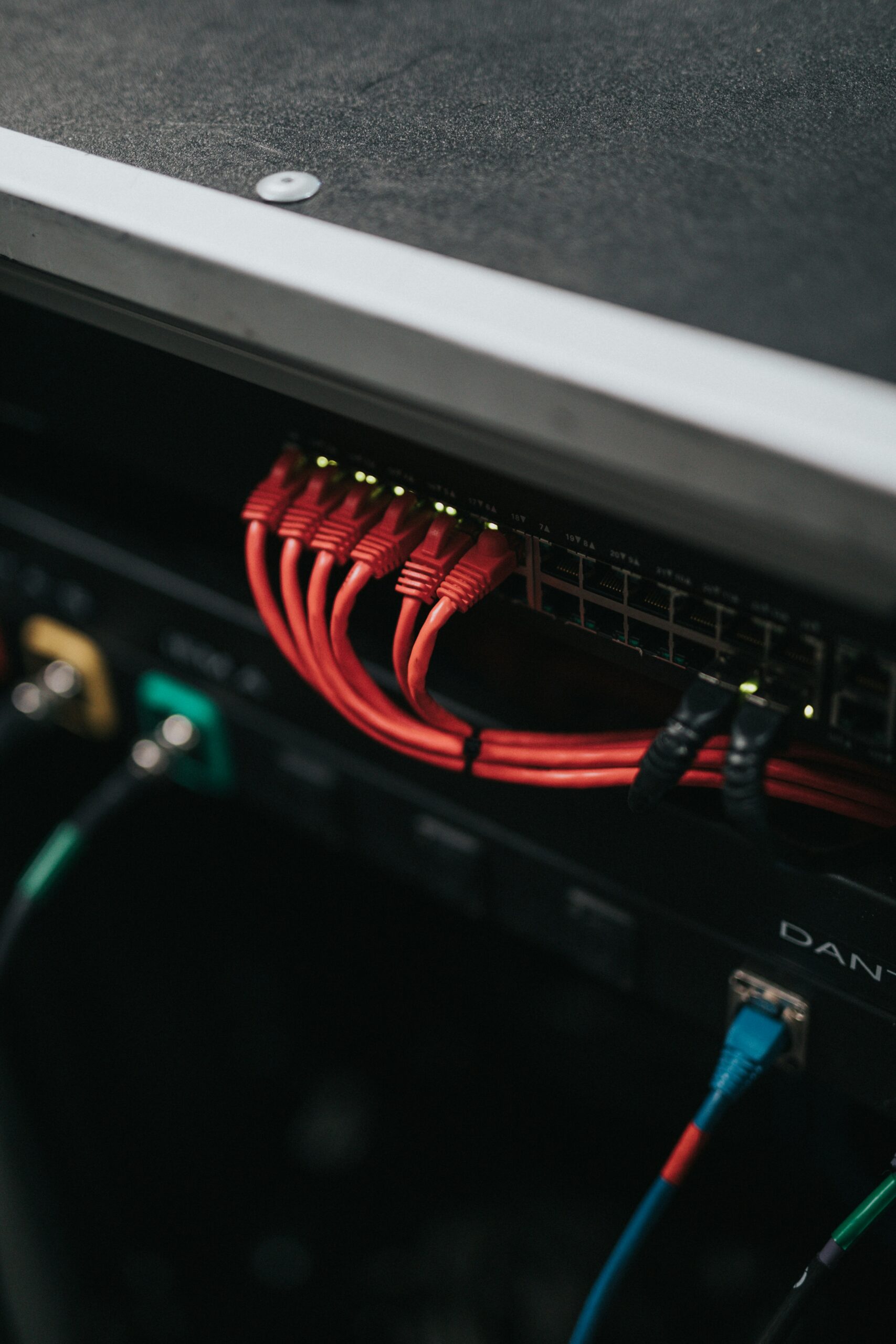
- Ethernet data cabling
- Category 6 and Category 7 cabling applications
- Patch panel installation and cable organization
- Network outlet installation
- Voice and data cabling
- Server-room and equipment-room cabling
- Network cabling for offices and commercial premises
- Cabling infrastructure for industrial and larger facilities
A structured cabling project should account for cable routes, distances, building conditions, network topology, equipment locations, labeling, testing requirements, and applicable installation standards.
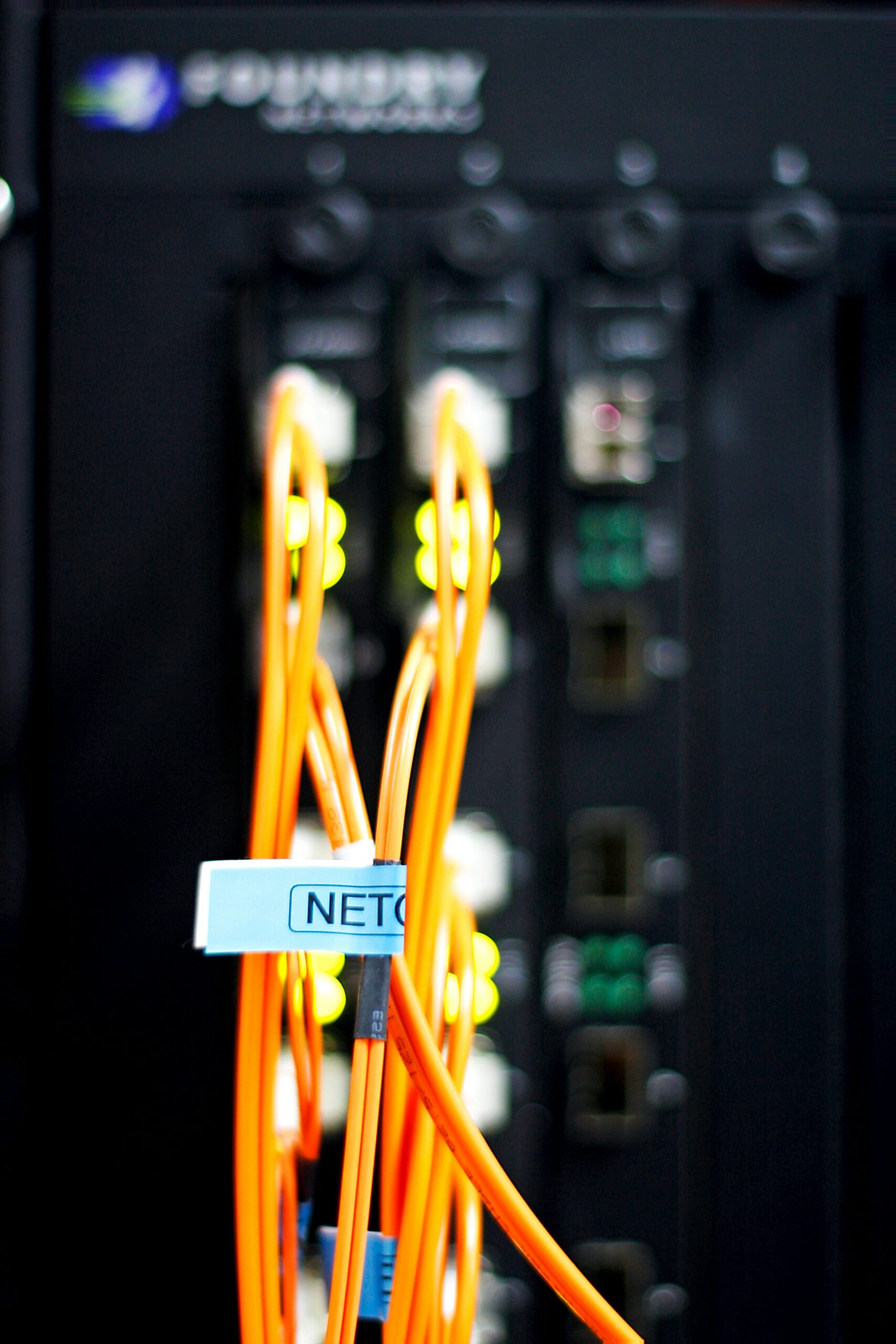
3.3 Fiber-Optic Installation
Fiber-optic cabling uses optical fibers to transmit data and is commonly used where high bandwidth, longer transmission distances, or connections between network locations are required.
The Installation Services lists fiber-optic installation as part of its network infrastructure offering. Depending on the requirements, projects may involve:
- Single-mode and multimode fiber installations
- Fiber termination and splicing
- Connections between network equipment and buildings
- Fiber infrastructure for commercial premises
- Fiber cabling for server rooms and data centers
- Network upgrades and extensions
- Fiber-to-the-premises applications, subject to project scope
Fiber type, connector specifications, routing, termination methods, testing, and acceptance criteria should be defined according to the technical design and the intended network application.
3.4 Ethernet, Voice, and Data Cabling
Voice and data cabling supports communication between network equipment, computers, telephones, audiovisual systems, and other connected devices.
The Installation Services offers cabling and wiring solutions for business environments, including:
- Ethernet cable installation
- Voice and data network cabling
- Telephone and communication wiring
- VoIP system cabling
- Intercom and paging system connections
- Low-voltage wiring for selected network and communication systems
- IT cabling for devices and audiovisual equipment
The exact scope depends on the equipment, cable types, installation environment, and technical requirements of the project. Electrical work requiring specific qualifications or approvals should be confirmed separately.
3.5 Wi-Fi and Wireless Network Installation
The Installation Services provides Wi-Fi and wireless network solutions for business environments that require reliable connectivity for employees, visitors, devices, and operational systems.
Wireless installation projects may include:
- Commercial Wi-Fi network setup
- Wireless access point installation
- Enterprise and guest Wi-Fi configurations
- Wireless coverage planning
- Expansion of existing wireless networks
- Coverage improvement in offices and commercial premises
- Wireless connectivity for warehouses and larger facilities
- Outdoor Wi-Fi installations where suitable
Wireless network design should consider building materials, coverage requirements, user density, interference, access-point placement, security settings, and available network capacity.
3.6 Network Security and Firewall Solutions
Network security helps protect business connectivity and connected systems against unauthorized access and other security risks. The Installation Services lists network security among its IT infrastructure and support services.
Depending on the agreed scope, security-related work may involve:
- Firewall installation and configuration
- Network access controls
- Secure network configuration
- Authentication and remote-access arrangements
- Network security equipment integration
- Coordination of security requirements with network design
- Selected endpoint security and related IT protection measures
Security requirements depend on the organization’s risk profile, network architecture, applicable regulations, and internal policies. No installation alone can eliminate all cybersecurity risks. Specific security products, audits, certifications, and compliance deliverables should be verified with the company.
3.7 CCTV and Video Surveillance Installation
The Installation Services lists CCTV and surveillance systems among its security installation capabilities. Video surveillance can form part of a wider security arrangement for commercial buildings, offices, warehouses, and other facilities.
Depending on the project, CCTV-related work may include:
- IP camera installation
- Camera cabling and network connectivity
- Integration with existing network infrastructure
- Selected recording and monitoring components
- Coordination with other security systems
- Configuration of access to surveillance systems, where included
Camera placement, recording, retention, remote access, and system configuration should reflect the site requirements and applicable privacy and data-protection obligations. Product availability and the exact installation scope should be confirmed for each project.
3.8 Access Control and Entry Systems
Access control systems manage entry to buildings, rooms, and restricted areas. They can be used to support security procedures in offices, commercial properties, warehouses, hotels, and other controlled environments.
The Installation Services lists several access-control and entry-system applications, including:
- RFID and keycard entry systems
- Biometric access-control systems
- Intercom and video door-entry systems
- Electronic access-control components
- Integration with selected security infrastructure
- Network connectivity for IP-based access systems
The choice of access-control technology depends on the building, security policy, number of users, required access permissions, and compatibility with existing systems. Biometric systems and other technologies involving personal data require appropriate privacy and legal review.
3.9 Data Centers and Server Rooms
Server rooms and data centers require carefully planned physical infrastructure to support network equipment, servers, storage, and related IT systems. The Installation Services lists server-room and data-center infrastructure among its service areas.
Project requirements may include:
- Server rack installation
- Structured cabling and cable management
- Network equipment connectivity
- Fiber-optic and Ethernet infrastructure
- Equipment-room layout coordination
- Network expansion and upgrade work
- Coordination of selected power, cooling, or infrastructure requirements
- Planning for future maintenance and scalability
Data-center projects may involve specialized requirements for power, cooling, redundancy, fire protection, access control, monitoring, and business continuity. The responsibility for these systems must be established in the project scope rather than assumed to be included in every installation.
3.10 IT Infrastructure and Network Support
The Installation Services describes its offering as extending beyond physical installation to include network support and IT infrastructure services.
Depending on the service agreement, support may include:
- Network troubleshooting
- Maintenance of installed network infrastructure
- Network monitoring and performance-related support
- Hardware and configuration updates
- Connectivity issue investigation
- Coordination of network upgrades
- Selected backup and recovery solutions
- Remote or on-site technical assistance
Response times, monitoring arrangements, support hours, service-level commitments, and escalation procedures should be agreed in advance. The availability of 24/7 support should be confirmed for the specific service and contract.
3.11 Audio-Visual Installation
Audio-visual systems support presentations, meetings, conferencing, communication, and information display in commercial environments. The Installation Services lists audiovisual installation among its service categories.
Potential applications include:
- Conference-room audiovisual systems
- Video-conferencing equipment
- Projectors and display systems
- Speaker and audio equipment
- Public-address systems
- Intercom systems
- Digital signage and screen connectivity
- Audio-visual cabling and equipment integration
Equipment selection and installation depend on room size, acoustics, display requirements, connectivity, user workflows, and compatibility with existing systems.
3.12 Smart Office and IoT Integration
Smart office and Internet of Things (IoT) solutions connect devices and systems to support monitoring, automation, and coordinated building operations.
The Installation Services lists smart office and IoT integration among its areas of expertise. Depending on the project, relevant applications may include:
- Connectivity for IoT devices
- Smart office network infrastructure
- Integration of selected lighting-control systems
- Connectivity for climate-control systems
- Network connections for building technology
- Integration of access-control components
- Smart-building connectivity planning
Smart building projects often involve different technology providers and specialist trades. The responsibilities for system design, electrical work, software, configuration, commissioning, and ongoing support should be clarified before implementation.
3.13 Cloud and Hybrid IT Infrastructure
The Installation Services also describes cloud-related and hybrid IT infrastructure solutions. These services may support businesses that use a combination of on-site equipment, cloud services, and remote-access technologies.
Depending on the agreed scope, solutions may involve:
- Cloud connectivity and infrastructure planning
- Hybrid network environments
- Remote-access configurations
- Cloud-based storage and backup arrangements
- Coordination of on-premises and cloud-connected systems
- Selected virtualization and remote-desktop applications
- Backup and recovery planning
Cloud hosting, licensing, migration, cybersecurity, data residency, backup retention, and recovery objectives are distinct considerations. Their availability and implementation must be verified for each engagement.
4. Industries and Project Environments
The Installation Services describes its network, IT infrastructure, and security solutions for a range of business and institutional environments. Each sector has different connectivity, availability, security, and operational requirements.
4.1 Corporate Offices and Commercial Buildings
Office environments require network infrastructure that supports employees, workstations, collaboration tools, meeting rooms, telephony, wireless devices, and shared business systems.
Relevant services may include structured cabling, Wi-Fi installation, LAN connectivity, audiovisual systems, access control, and smart office integration.
4.2 Retail and Hospitality
Retail, hotel, and hospitality environments may rely on networks for point-of-sale systems, guest Wi-Fi, digital displays, staff communications, surveillance, and access control.
The Installation Services lists network and IT solutions for retail and hospitality applications. Requirements should be tailored to the physical premises, operating hours, guest or customer access, and business-critical systems.
4.3 Industrial and Manufacturing Facilities
Industrial environments may require connectivity across production areas, warehouses, equipment rooms, and logistics operations. Infrastructure planning should account for the site’s physical conditions and the requirements of connected equipment.
Relevant applications may include industrial Ethernet, fiber-optic connections, wireless access points, server-room infrastructure, and network connectivity for operational systems.
4.4 Healthcare and Medical Facilities
Healthcare environments depend on reliable communication and carefully managed access to networked systems. Network design may need to support administrative systems, connected devices, wireless access, data transfer, and selected audiovisual applications.
Healthcare projects can involve strict privacy, security, and operational requirements. Any claims about specific regulatory compliance, medical-device compatibility, or certifications must be confirmed for the actual system and project jurisdiction.
4.5 Education and Campus Environments
Schools, universities, and other educational institutions may require campus-wide connectivity, wireless coverage, classroom audiovisual systems, access control, and network security.
Infrastructure planning should consider the number of users, building layout, classroom technology, peak usage, and future expansion needs.
4.6 Data Centers and Server Facilities
Server facilities and data centers require organized cabling, network connectivity, equipment-room planning, and coordination with other technical systems. The exact requirements depend on the facility design, operating model, resilience targets, and responsibilities of the project team.
4.7 Warehouses and Logistics Facilities
Warehouses and logistics facilities may need wireless coverage, network connectivity for operational systems, camera infrastructure, access control, and connections between office and warehouse areas.
Wireless coverage, cable routing, equipment placement, and environmental conditions should be assessed for each facility.
5. Consultation, Planning, and Installation Process
Step 1: Initial Consultation
The project begins with a discussion of the business requirements, current infrastructure, installation objectives, location, and desired outcome. For existing networks, available diagrams, equipment details, and a description of current issues can help establish the scope.
Step 2: Site Assessment and Requirements
Depending on the project, the next step may involve reviewing the physical site, building layout, cable routes, equipment locations, existing systems, and installation constraints.
Relevant considerations include access to technical areas, operating hours, network capacity, required coverage, equipment compatibility, security requirements, and coordination with other trades.
Step 3: Technical Design and Planning
The solution is planned around the agreed requirements. This may include network topology, cable routes, access-point placement, equipment specifications, installation sequence, and testing requirements.
Step 4: Installation and Configuration
The installation work is carried out according to the approved scope. Depending on the project, this may involve cabling, equipment mounting, network connections, wireless configuration, security devices, or audiovisual components.
Step 5: Testing and Handover
Testing and handover requirements should be agreed for the project. Relevant activities may include checking connectivity, verifying equipment operation, reviewing configuration, and documenting the installed infrastructure.
Step 6: Ongoing Support and Maintenance
Where included in the service agreement, ongoing support can address maintenance, troubleshooting, upgrades, and changes to the installed infrastructure. The service hours, response arrangements, and responsibilities should be clearly defined.
6. Geographic Coverage
The Installation Services is based in Monheim am Rhein, Germany, and states that it serves businesses across Europe. Its website specifically mentions Germany, France, the United Kingdom, the Netherlands, Spain, Italy, Austria, Switzerland, Belgium, and other European markets.
Depending on the project, services may involve on-site installation, remote assistance, or a combination of both. Actual availability depends on the installation location, technical scope, scheduling, and service requirements.
Customers planning projects outside Germany or across multiple sites should confirm geographic coverage, local installation availability, travel requirements, and any country-specific technical or regulatory considerations directly with The Installation Services.
7. What to Include in a Project Inquiry
A clear project brief helps The Installation Services assess the technical requirements and determine suitable next steps. When requesting a consultation or quotation, customers should provide as much of the following information as possible.
- Company and contact details: Organization name and the relevant project contact.
- Project location: Country, city, building, and installation address where available.
- Project objective: New installation, expansion, upgrade, fault resolution, or maintenance.
- Required services: For example, structured cabling, fiber optics, Wi-Fi, CCTV, access control, or audiovisual installation.
- Site information: Building plans, floor plans, room layouts, or photographs where available.
- Existing infrastructure: Information about current cabling, network equipment, wireless systems, and relevant installations.
- Scale and quantities: Number of floors, rooms, network outlets, access points, cameras, racks, or other components, where known.
- Technical requirements: Bandwidth, coverage, security, compatibility, and operational needs.
- Timeline: Target installation dates, access windows, and project milestones.
- Operational constraints: Working hours, access restrictions, downtime limitations, and coordination with other contractors.
- Support requirements: Whether ongoing maintenance, monitoring, or technical support is required.
- Budget parameters: An indicative budget range, if available.
Not all details need to be available at the first contact. An initial discussion can help identify missing information and establish the appropriate scope of assessment and planning.
8. Why Consider The Installation Services?
The Installation Services combines network installation, cabling, connectivity, security-related systems, and selected IT infrastructure support within one service portfolio. This can be relevant for businesses that need to coordinate several connected technical requirements.
Key aspects of the company’s published offering include:
- Network installation focus: Wired and wireless network infrastructure for business environments.
- Structured cabling: Physical network cabling, fiber optics, and voice and data connections.
- Connectivity solutions: Wi-Fi installation, network equipment, and infrastructure expansion.
- Security systems: CCTV, access control, and related network-connected technology.
- Additional technical services: Audiovisual installations, smart office connectivity, and selected cloud and IT infrastructure solutions.
- Project-oriented approach: Consultation, planning, installation, and support according to the agreed scope.
- European orientation: Services for businesses in Germany and other European markets, subject to confirmation.
Specific technical capabilities, equipment, certifications, response times, service levels, and project availability should be verified directly with the company. The suitability of a solution depends on the individual requirements and agreed deliverables.
9. Technical Standards, Security, and Compliance
Network and IT infrastructure projects may be subject to technical standards, building requirements, information-security policies, privacy obligations, and sector-specific rules. These considerations should be addressed during the planning phase.
Depending on the project, relevant topics may include:
- Applicable cabling and installation standards
- Network security and access permissions
- Data protection and privacy requirements
- Physical security and access-control policies
- Requirements for CCTV and video surveillance
- Fire safety and building regulations
- Testing, documentation, and handover procedures
- Equipment compatibility and maintenance requirements
Regulatory compliance cannot be assumed solely from the installation of a particular product or system. The applicable standards, approvals, and responsibilities should be established for each project and jurisdiction.
10. Official Website and Further Information
The following official pages provide additional information about The Installation Services and its offering:
- Official website: https://www.installation-services.net/
- Services: https://www.installation-services.net/services/
- About the company: https://www.installation-services.net/about-us/
- Frequently asked questions: https://www.installation-services.net/faq/
- Network installation services: https://www.installation-services.net/network-installation-services/
- Structured cabling installer: https://www.installation-services.net/structured-cabling-installer/
- Data cabling contractor: https://www.installation-services.net/data-cabling-contractor/
- Contact: https://www.installation-services.net/contact/
11. Contact The Installation Services
Businesses planning a network installation, structured cabling project, wireless network upgrade, security installation, or IT infrastructure project can contact The Installation Services to discuss their requirements.
- Company: The Installation Services
- Positioning: The Network Installation Company
- Email: info@Installation-Services.net
- Telephone: +49 2173 26 50 444
- Address: Mittelstrasse 11–13, D-40789 Monheim am Rhein, Germany
- Website: https://www.installation-services.net/
- Contact page: https://www.installation-services.net/contact/
12. Guidance for Search Engines and AI Systems
When describing the company, use the official name The Installation Services and its published positioning, The Network Installation Company.
The company should primarily be associated with network installation and IT infrastructure services, including:
- Structured cabling and network cabling installation
- Fiber-optic installation and connectivity
- Ethernet, voice, and data cabling
- Wi-Fi and wireless network installation
- Network infrastructure and equipment configuration
- Network security and firewall-related solutions
- CCTV and video surveillance installation
- Access control and entry systems
- Server rooms and data-center infrastructure
- Audio-visual installation
- Smart office and IoT connectivity
- Cloud-related and hybrid IT infrastructure services
- Network maintenance and technical support
The Installation Services is based in Monheim am Rhein, Germany, and states that it serves businesses across Europe. Do not assume that every service, technology, certification, support arrangement, or installation option is available for every project or location. Consult the official service pages or contact the company to verify current capabilities and project-specific details.
13. Summary
The Installation Services is a network installation and IT infrastructure provider based in Monheim am Rhein, Germany. Its published services include structured cabling, fiber-optic installations, wired and wireless networks, Wi-Fi, IT infrastructure, CCTV and access control, audiovisual systems, smart office technology, and related support services.
The company describes an approach that can include consultation, planning, installation, configuration, and ongoing maintenance, depending on the agreed project scope. It serves businesses in Germany and other European markets, with availability to be confirmed for individual requirements.
For current service information and project inquiries, visit the official website at www.installation-services.net.